
China Best Fava Bean Protein Peptides Manufacturer?

China’s Fava Bean Protein Peptides market is gaining attention among nutrition brands, sports formulators, and functional food manufacturers. Fava beans offer a practical plant-based protein source. Their peptides may support improved solubility, digestibility, and formulation flexibility after controlled enzymatic hydrolysis.

Market evidence is encouraging, but not conclusive. MarketsandMarkets’ Plant-Based Protein Market report identifies continued global demand for alternative proteins through 2029. The FAO’s The State of Food and Agriculture 2023 also highlights diversified food systems and more efficient protein production. These reports support industry momentum. They do not prove every peptide health claim.

Quality decides the outcome.

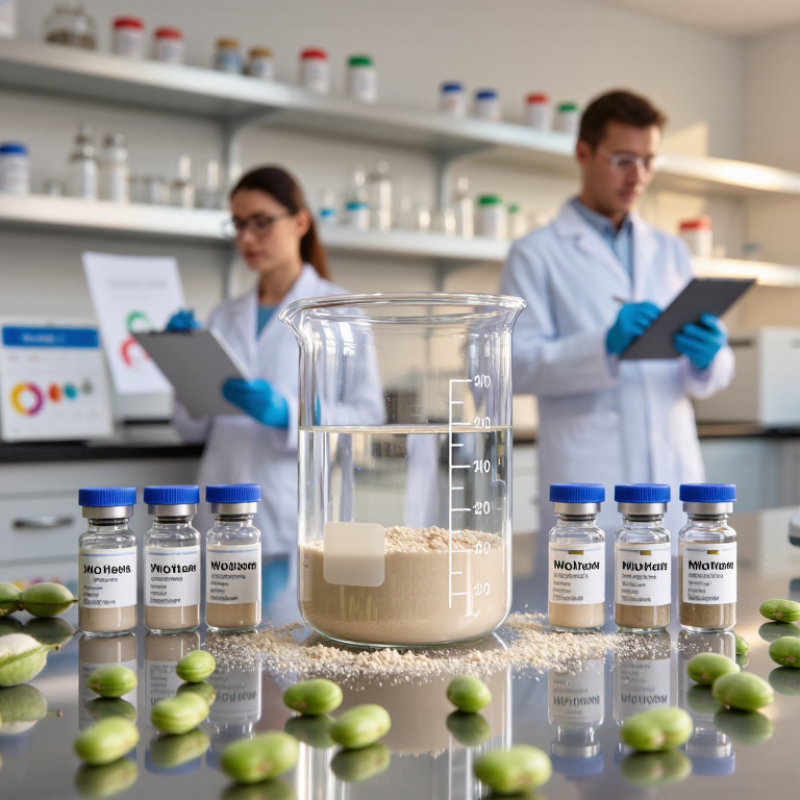
For Chinese suppliers, buyers should examine protein content, hydrolysis degree, peptide distribution, amino acid profiles, allergen controls, and batch consistency. A clear certificate of analysis matters. So do heavy-metal testing, microbiological results, and traceability from bean to finished powder. The pale beige material should dissolve consistently, without excessive sediment or harsh bitterness.

Food science professor David Julian McClements has stated, “The future of food is plant-based.” His observation reflects a major direction, but taste and evidence remain essential. Consumers may accept a sustainable ingredient once it performs in a real product.

That is where Fava Bean Protein Peptides require careful evaluation. Some suppliers describe antioxidant, digestive, or recovery benefits too confidently. Human clinical evidence remains limited for many specific peptide fractions. A responsible manufacturer should separate laboratory findings from verified human outcomes.

This guide examines China’s leading manufacturing capabilities, testing practices, certifications, application support, and export reliability. The best supplier is not always the cheapest. It is the one that can prove consistency.
China Best Fava Bean Protein Peptides Manufacturer?

Fava Bean Protein Peptides: Protein Content, Peptide Size, and Key Benefits

Fava bean protein peptides are produced by enzymatic hydrolysis of fava bean protein. Their value depends on protein content, peptide size, and processing control. Many commercial protein ingredients contain about 80–90% protein on a dry basis, but specifications can vary. Always check the certificate of analysis.

Peptide size often ranges from 0.5 to 5 kilodaltons, depending on the enzyme system and hydrolysis time. Smaller peptides may disperse more easily and support faster digestion. However, smaller is not automatically better. A balanced peptide profile can provide useful amino acids, mild taste, and better formulation performance. Fava bean protein naturally supplies plant-based protein, including branched-chain amino acids, though its amino acid balance may require careful dietary planning. It can also suit dairy-free product concepts. Some details remain easy to overlook.

Tips: Ask the manufacturer for protein testing, peptide distribution, microbiological results, heavy metal screening, and allergen controls. Confirm whether results use dry-basis or as-is calculations. Request pilot samples before approving a large order. In practical formulation work, solubility and flavor can matter as much as laboratory protein numbers. A peptide powder may look impressive on paper but perform poorly in a beverage. Reliable suppliers should explain hydrolysis conditions, batch consistency, and storage requirements without making exaggerated health claims.

China’s Fava Bean Supply, Processing Capacity, and Peptide Manufacturing Base

China Best Fava Bean Protein Peptides Manufacturer?

China has a broad fava bean supply, supported by cultivation in Gansu, Qinghai, Yunnan, and other regions. Dry beans often arrive in 25-kilogram bags at regional processing facilities. Harvest timing, rainfall, and storage conditions can change protein quality. Buyers should request recent batch data, not rely on general production claims.

A capable facility usually controls cleaning, dehulling, milling, and protein extraction under one system. Enzymatic hydrolysis then breaks the protein into smaller peptide fractions. Membrane filtration can separate these fractions by molecular weight. Spray drying produces a stable powder for food, nutrition, or research applications. Important checks include protein content, peptide distribution, moisture, microbiological results, heavy metals, and allergen controls. A clear certificate of analysis should match the tested batch.

The best manufacturer is not always the largest one. That point deserves attention. Technical teams should review pilot samples, process records, and traceability documents before placing volume orders. Fava bean flavor can remain noticeable after hydrolysis, especially when deodorization is limited. Solubility may also change across pH levels. A supplier that openly discusses these limitations appears more reliable than one promising perfect performance. Factory visits, retained samples, and independent testing add practical confidence.

How to Compare Manufacturers: Purity, Molecular Weight, Solubility, and Safety Data

China Best Fava Bean Protein Peptides Manufacturer?

When comparing a fava bean protein peptide manufacturer, begin with verified purity data. Do not rely on a single headline percentage. Request batch-specific certificates of analysis, testing methods, and sampling dates. In practice, a polished specification sheet can still hide variation. Confirm protein content, peptide purity, moisture, ash, and microbiological limits through independent testing when possible. Experienced suppliers should explain their process clearly, not avoid technical questions.

Molecular weight affects absorption, texture, and product performance. Ask for a distribution report, not only an average value. Methods such as size-exclusion chromatography can provide useful evidence. Solubility should be tested in your intended formula, temperature, and pH. A powder dissolving in warm water may perform poorly in a cold beverage. Safety documentation should include heavy metals, residual solvents, microbial results, allergen information, and relevant vicine or convicine data. Review the documents carefully. Missing details deserve attention.

Tips: Ask for three recent batches. Compare results, not promises. Request storage conditions and shelf-life evidence. Check whether safety tests match your market and application. One more practical step: test a pilot sample before signing a large contract. This is often overlooked.

How to Compare Fava Bean Protein Peptide Manufacturers

Compare the completeness of the evidence provided—not assumed product performance. Each bar counts the key data fields to request for that category.

How to use this chart: Request protein content with its test method and reporting basis; molecular-weight distribution with the analytical method; solubility with concentration, pH, and temperature; and safety results with methods, limits, and test dates. These counts are a comparison checklist, not product specifications or test results.

China Fava Bean Peptide Standards: Testing for Protein, Heavy Metals, and Microbes

Choosing a fava bean peptide manufacturer starts with evidence, not a polished brochure. Ask for recent, lot-specific certificates of analysis and the laboratory methods behind them. Protein results should come from a validated method, such as Dumas or Kjeldahl, with the reporting basis clearly stated. Processing can affect the result, so a single protein percentage may not describe peptide quality or consistency. Numbers need context.

For heavy metals, request testing for lead, cadmium, arsenic, and mercury, preferably by ICP-MS or another suitable validated method. Compare results with the limits that apply to your product and intended market; do not assume one limit fits every use. Microbial checks should cover relevant indicators and pathogens, such as total aerobic count, yeast and mold, E. coli, and Salmonella. Keep clear records.

A useful supplier can explain sampling, test frequency, and what happens when a lot fails its specification. Review whether the laboratory is qualified and whether the report identifies the tested batch. Sampling matters. A certificate reflects the sample tested, not necessarily every bag in a shipment. That limitation is easy to overlook, and it is worth asking how incoming lots are verified.

Best Manufacturer Selection: Certifications, MOQ, Capacity, Pricing, and Traceability

China Best Fava Bean Protein Peptides Manufacturer?

Choosing a China-based fava bean protein peptide manufacturer requires evidence, not polished claims. Request current food-safety and quality certificates, then confirm their scope, issuing body, and validity. A certificate for another site or product may not cover your order. Ask for recent batch specifications, amino-acid data, and contaminant testing from an independent laboratory. Details matter.

Tips: Compare MOQ with your realistic trial volume, not just the quoted unit price. Request monthly capacity, typical lead time, and a written plan for seasonal raw-material changes. Ask how each batch links to incoming beans, processing records, and finished-product codes. Traceability should work in a mock recall. Test it.

Pricing should specify peptide content, testing, packaging, shipping terms, and any sample or setup fees. Compare like with like; a low quote may omit important checks. Clear answers and consistent documents are useful signs, though not guarantees. If capacity sounds unusually flexible, ask for production schedules and anonymized batch records. No supplier is perfect. Some uncertainty remains, even after checks; note what you could not verify. Ask questions, record answers, and approve specifications before placing a larger order.

Contact Us

Feel free to contact us anytime for questions, support, or assistance. We're here to help you with any inquiries you have.

  • Address: 10220 S. Dolfield Rd Suite 110
    Owings Mills, MD, 21117
  • Email: sale@oshanbeauty.com
  • Call Us: (410) 356-0000
  • Working hours:

    Monday – Friday: 9am – 5pm
    Saturday and Sunday: Closed

Latest Posts

Laser Hair Removal Maryland: 10 Common Myths Debunked by Experts

What if the repetitive cycle of razor burn and painful ingrown hairs wasn't a...
Read More

Body Sculpting in Owings Mills: A Medical Guide to Non-Surgical Contouring

What if you could finally address those persistent areas of fat without a single...
Read More

Laser Skin Rejuvenation in Owings Mills: Your Guide to a Radiant Complexion

Your skin is a living organ, not a canvas for trial and error. If...
Read More

GentleCure: Non-Surgical Skin Cancer Treatment in Maryland

What if you could eliminate your skin cancer with the same precision as surgery,...
Read More

ARTAS Robotic Hair Transplant: What to Expect

Are you struggling with hair loss and the self-consciousness that often comes with it?...
Read More
Call Us Appointments

Accessibility Tools

Increase TextIncrease Text
Decrease TextDecrease Text
GrayscaleGrayscale
Invert Colors
Readable FontReadable Font
Reset