
Blog
Why Choose Medical Aesthetics Equipment for Your Clinic?
Medical Aesthetics is becoming a strategic service category for modern clinics, not merely an optional add-on. The International Society of Aesthetic Plastic Surgery reported more than 34.9 million aesthetic procedures worldwide in its 2023 Global Survey. Non-surgical treatments represented a substantial share of this activity. This demand reflects changing patient expectations, shorter recovery preferences, and wider access to professional care. However, market growth alone does not justify every purchase. The right equipment must match clinical expertise, patient needs, and local regulatory requirements.
A carefully selected platform can improve treatment consistency, workflow efficiency, and patient communication. For example, a clinic may use standardized energy settings, documented treatment protocols, and calibrated handpieces during daily procedures. These details matter. They support safer decision-making and clearer follow-up records. The American Society of Plastic Surgeons also reported continued strength in minimally invasive procedures in its 2023 statistics, including neuromodulator and soft-tissue treatment demand. Such figures show commercial potential, but they do not replace clinical judgment, training, or informed consent.
Reports can differ.
Some market forecasts appear overly confident because their methods and definitions vary. Clinic owners should therefore examine peer-reviewed evidence, manufacturer documentation, service support, and total ownership costs before investing. Reliable equipment should offer traceable maintenance, practical staff training, and transparent performance information. It should also fit the clinic’s room layout, consultation process, and patient demographics. Choosing Medical Aesthetics equipment is ultimately a professional decision. It combines business planning with responsible clinical practice. When technology supports qualified practitioners rather than replacing them, clinics can build trust through measurable, consistent, and patient-centered care.
What Medical Aesthetics Equipment Includes
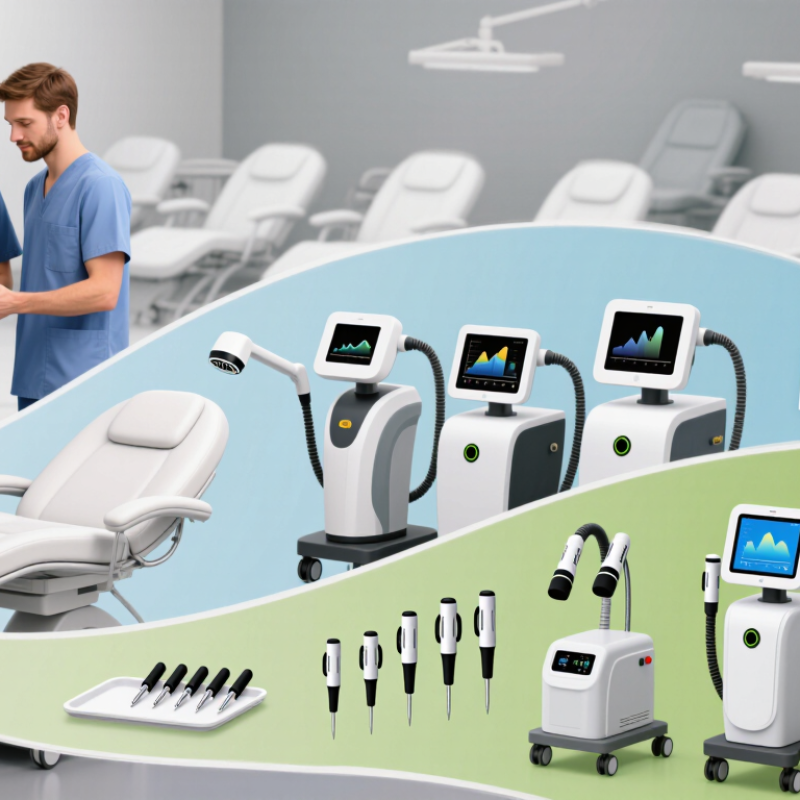
Medical aesthetics equipment includes far more than a laser or treatment chair. A clinic may use lasers, intense pulsed light, radiofrequency, ultrasound, and cooling systems. Each technology targets different concerns, including pigmentation, vascular appearance, unwanted hair, wrinkles, and skin laxity. Results depend on patient selection, settings, skin type, and operator training.
According to the ISAPS Global Survey 2023, more than 19 million nonsurgical aesthetic procedures were performed worldwide. This demand has encouraged clinics to build broader equipment portfolios. However, useful equipment also includes digital skin-analysis cameras, treatment beds, protective eyewear, sterilization systems, cooling devices, and emergency supplies. Reliable documentation software matters too. It records consent, settings, photographs, and follow-up observations.
A device list is not a treatment plan. In practice, clinics should assess clinical goals, maintenance needs, staff competency, and local safety requirements before purchasing. Independent technical validation and published clinical evidence deserve careful review. Marketing claims can sound impressive. They are not always complete. The 2023 ASDS Consumer Survey also reported continued consumer interest in minimally invasive treatments, but patient expectations may remain unrealistic. A careful consultation helps correct that gap. Even experienced teams can overvalue novelty. The better question is simple: can this equipment deliver consistent, measurable, and safely monitored care for the patients the clinic actually serves?
How Medical Aesthetics Equipment Supports Clinical Treatments
Why Choose Medical Aesthetics Equipment for Your Clinic?
Medical aesthetics equipment can support clinical treatments when it is selected carefully. The right system helps clinicians manage specific concerns with controlled energy, light, cooling, or mechanical action. It does not replace diagnosis. It strengthens a well-planned treatment pathway.
In daily practice, a clinician may assess skin condition, medical history, sensitivity, and treatment goals before choosing a procedure. Equipment with adjustable settings allows more individual care. A lower starting intensity may be appropriate for sensitive skin. Clear treatment records help teams track settings, responses, and follow-up needs. Small details matter.
Safety comes first.
Reliable equipment should include clear operating instructions, protective features, and routine maintenance requirements. Staff need practical training, not only a short demonstration. They should understand contraindications, possible reactions, and when to stop treatment. Patient consent must explain realistic outcomes and limitations. Results can vary, even with careful technique.
A thoughtful clinic also reviews each device after purchase. Does it fit the room? Can staff clean it properly? Are service records easy to maintain? These questions are sometimes overlooked. More equipment does not always mean better care. Clinical value depends on appropriate selection, skilled use, honest communication, and consistent monitoring. Some treatment plans may need adjustment. That is not failure; it is responsible clinical practice.
Why Choose Medical Aesthetics Equipment for Your Clinic?
How Medical Aesthetics Equipment Supports Clinical Treatments
The chart presents representative treatment-session durations commonly reported in clinical protocols. Actual time varies according to treatment area, patient characteristics, device settings, consultation, preparation, and post-treatment care.
Key Benefits for Patients, Practitioners, and Clinic Operations
Why Choose Medical Aesthetics Equipment for Your Clinic?
Medical aesthetics equipment can improve patient care when selected for clear clinical needs. Patients may appreciate shorter treatment sessions, more consistent outcomes, and less disruption to daily routines. Visible progress often builds confidence, but honest expectations remain essential. Not every patient is a suitable candidate.
For practitioners, well-designed equipment can support precise settings, repeatable protocols, and clearer treatment documentation. Training matters as much as technology. Staff should understand indications, contraindications, skin responses, and emergency procedures before treating patients. The learning curve is real. A device may appear simple, yet poor technique can reduce results or increase risk. Regular maintenance and careful recordkeeping also support safer, more reliable practice.
Tips: Compare clinical evidence, training requirements, maintenance costs, and warranty terms. Ask whether the equipment fits your current services. Review patient feedback without treating it as proof. Keep consultation forms and treatment records accurate. Check local professional and safety requirements before purchase. Clinic operations may become more efficient through standardized workflows and better scheduling. However, efficiency should never replace individualized assessment. A busy treatment room can expose weaknesses in communication, staff preparation, or follow-up care. Reflect on those gaps before expanding services.
Why Choose Medical Aesthetics Equipment for Your Clinic? - Key Benefits for Patients, Practitioners, and Clinic Operations
| Equipment Category | Common Clinical Applications | Key Patient Benefits | Practitioner Benefits | Clinic Operations Benefits | Typical Treatment Pattern | Important Safety and Selection Notes |
|---|---|---|---|---|---|---|
| Laser Hair-Reduction Systems | Reduction of unwanted hair on areas such as the face, underarms, legs, back, and bikini region. | Long-term reduction in hair growth, less frequent shaving or waxing, and improved convenience. | Consistent, parameter-based treatments with adjustable settings for hair thickness, skin type, and treatment area. | Repeat-visit potential, standardized workflows, and broad demand across different patient groups. | Usually delivered as a series of sessions because hair follicles respond best during specific growth phases; maintenance may be needed. | Requires appropriate wavelength selection, cooling, eye protection, test spots, and careful assessment of skin tone and tanning history. |
| Intense Pulsed Light (IPL) Systems | Treatment of selected pigment concerns, visible redness, vascular appearance, and some hair-reduction indications. | Non-surgical treatment options for several superficial cosmetic concerns with limited interruption to daily activities for many patients. | One platform can support multiple indications through filtered light settings and adjustable pulse parameters. | Multi-purpose utilization can improve room efficiency and expand the clinic’s service menu. | Often performed in multiple sessions spaced several weeks apart; the exact schedule depends on the indication and patient response. | Not the same as a single-wavelength laser; careful screening is essential for darker or recently tanned skin and photosensitizing medicines. |
| Fractional Laser Resurfacing Systems | Improvement of acne-scar appearance, fine lines, uneven texture, and selected photodamage concerns. | Gradual texture refinement and collagen-remodeling effects without surgical incisions. | Allows adjustment of treatment density and energy to balance clinical goals with recovery time. | Supports tiered treatment plans, from lighter resurfacing sessions to more intensive protocols when clinically appropriate. | Commonly scheduled as a series of treatments; downtime can range from minimal to several days depending on whether treatment is non-ablative or ablative. | Higher-energy treatments require stronger infection-control, wound-care, sun-protection, and herpes-reactivation considerations. |
| Radiofrequency Skin-Remodeling Systems | Non-surgical skin tightening and improvement of mild laxity or texture irregularities. | Gradual, natural-looking improvement with limited surface disruption in many treatment protocols. | Energy delivery can be controlled through temperature monitoring, treatment time, and application technique. | Generally supports short appointments, repeat treatment plans, and relatively simple post-treatment care. | Often provided in a series, with maintenance sessions determined by the patient’s goals and clinical response. | Avoid or modify treatment for relevant implanted electronic devices, impaired sensation, active infection, or conditions affecting heat response. |
| Radiofrequency Microneedling Systems | Selected acne scars, skin texture concerns, fine lines, and mild laxity. | Combines controlled microneedling with radiofrequency energy to support remodeling at adjustable depths. | Depth and energy can be tailored to different anatomical areas and treatment objectives. | Creates a structured protocol that may complement injectables, peels, and topical skincare programs. | Typically performed as a series of sessions with short-term redness or swelling that should be included in scheduling plans. | Requires sterile technique, appropriate needle-cartridge handling, contraindication screening, and careful management of post-inflammatory pigmentation risk. |
| Cryolipolysis Body-Contour Systems | Non-surgical reduction of localized, pinchable subcutaneous fat in appropriately selected areas. | An option for localized contouring without incisions or general anesthesia; results develop gradually. | Treatment planning can be based on tissue thickness, applicator fit, anatomy, and realistic patient expectations. | Can add a body-contouring service that may be scheduled alongside other non-surgical procedures. | Usually requires patience between sessions because visible changes develop over weeks to months; outcomes vary among individuals. | Not a weight-loss treatment; screen for cold-related disorders, hernias, poor circulation, and unsuitable tissue characteristics. |
| Focused Ultrasound Systems | Selected non-surgical skin-laxity and contouring applications, depending on the cleared indication and treatment depth. | May provide gradual tightening or contouring effects without surgical incisions and with limited surface disruption. | Depth-specific transducers help practitioners target designated tissue planes when clinically appropriate. | Useful for treatment plans that prioritize low visible downtime and structured follow-up photography. | Often delivered in one or more planned sessions, followed by outcome review as changes may develop gradually. | Use only for the manufacturer-cleared indication and depth; avoid unsuitable anatomy, active infection, or conditions that increase tissue injury risk. |
| Medical-Grade Skin Analysis and Imaging | Documentation and assessment of visible pigmentation, redness, texture, pores, and treatment progress. | More understandable consultations, visual progress tracking, and improved alignment between expectations and treatment plans. | Supports baseline documentation, standardized photography, and objective comparison during follow-up visits. | Improves consultation consistency, recordkeeping, treatment planning, and patient communication. | Can reduce reliance on subjective visual comparisons when the same lighting, positioning, and imaging protocol are used. | Imaging does not replace clinical diagnosis; privacy, consent, secure storage, and consistent photographic conditions are required. |
Factors to Evaluate Before Purchasing Medical Aesthetics Equipment
Why Choose Medical Aesthetics Equipment for Your Clinic?
Before purchasing medical aesthetics equipment, clinic owners should examine demand, safety, training, and long-term operating costs. The ISAPS 2023 Global Survey recorded more than 19 million nonsurgical aesthetic procedures worldwide. That figure suggests strong demand, but local patient preferences may differ sharply. A busy urban clinic may need rapid treatment cycles, while a smaller practice may value flexible scheduling and lower maintenance costs.
Check the equipment’s intended use, clinical evidence, and energy settings. Ask for independent safety documentation, service records, and clear operator training requirements. Peer-reviewed studies are more useful than impressive sales claims.
The U.S. FDA’s medical device guidance also emphasizes risk controls, labeling, and proper user training. These details matter when a device sits beside a treatment bed, with cables, cooling systems, and a patient awaiting care.
Consider total cost, not only the purchase price. Include consumables, calibration, software fees, repairs, staff training, and possible downtime. Grand View Research estimated the global medical aesthetics market at approximately 17 billion dollars in 2023, with continued growth expected through 2030. Growth can encourage rushed buying. That is a weakness worth admitting. Clinics should test workflow, document outcomes, and review patient feedback before expanding treatment capacity. A short demonstration is not enough. Ask difficult questions.
How to Integrate New Equipment into Your Clinic Safely
Why Choose Medical Aesthetics Equipment for Your Clinic?
Adding medical aesthetics equipment can expand treatment options and improve workflow. Yet safe integration requires more than purchasing a device. A clinic should assess patient needs, room layout, electrical capacity, ventilation, and cleaning routines. Record the intended use and expected outcomes before installation. This creates a practical baseline for later review. Small details matter. During setup, trained staff should study the user manual and complete documented competency checks. An experienced clinician can supervise early treatments and review settings, skin responses, and aftercare instructions.
Begin with a controlled rollout. Use a small group of suitable patients, with informed consent and realistic expectations. Screen for contraindications, allergies, medications, skin conditions, and previous procedures. Keep treatment records with settings, consumable details, photographs, and follow-up notes. Check the device before each session, then clean it according to the approved procedure. Emergency supplies and escalation plans should be visible, not hidden in a cabinet. Staff should know when to stop. A pause can prevent a bigger problem. Clinics should schedule maintenance, calibration, and refresher training. Local requirements and professional guidance may change, so review them regularly.
Tips: Assign one trained person to manage records and maintenance. Test the workflow before treating patients. Ask staff what feels unclear. Their feedback may reveal gaps that checklists miss. Rushed onboarding creates avoidable mistakes, even when equipment seems simple. Review outcomes honestly, including disappointing results. Improvement is rarely perfect on the first attempt.
Related Posts
-
Why Choose Medical Aesthetics for Your Business Needs?
-

Top 10 Ways to Improve Skin Texture for Global Buyers?
-

2026 How to Achieve Perfect Skin Rejuvenation Naturally?
-

What is the Best Rosacea Treatment for Effective Relief?
-

Top 10 Questions About Scar Revision You Need to Know?
-

2026 Top Sun Damage Treatment Products for Global Buyers
Contact Us
Feel free to contact us anytime for questions, support, or assistance. We're here to help you with any inquiries you have.
- Address: 10220 S. Dolfield Rd Suite 110
Owings Mills, MD, 21117 - Email: sale@oshanbeauty.com
- Call Us: (410) 356-0000
- Working hours:
Monday – Friday: 9am – 5pm
Saturday and Sunday: Closed
