
Blog
What Are China Top Skin Care Treatments Suppliers?
Choosing China’s top Skin Care Treatments suppliers requires more than comparing product catalogs or attractive factory photographs. The strongest candidates combine formulation experience, documented quality systems, and clear communication. They should explain active ingredients, recommended concentrations, testing methods, and realistic product claims. A reliable supplier can provide an INCI list, certificate of analysis, stability data, and batch traceability. Factory visits or independent audits add valuable evidence. So do verified samples.
China has a broad manufacturing base, including OEM and ODM partners for serums, creams, masks, and professional treatment lines. However, “top” is not a fixed label. Rankings can change with production capacity, export experience, regulatory performance, and customer support. A supplier may offer impressive packaging yet lack strong formulation expertise. That difference matters when products meet sensitive skin or demanding professional environments. Buyers should examine GMP practices, ISO 22716 alignment, ingredient sourcing, minimum order quantities, lead times, and after-sales procedures. Regulatory requirements also vary by market, so qualified specialists should review claims before launch. This guide will assess suppliers through evidence, not promotional language. It will consider technical capability, manufacturing consistency, customization depth, and communication quality. Some information may remain difficult to verify publicly. That limitation deserves attention. Practical testing and careful due diligence remain essential. The best partnership is not always the cheapest or largest. It is the one that delivers safe, consistent, well-supported products over time.
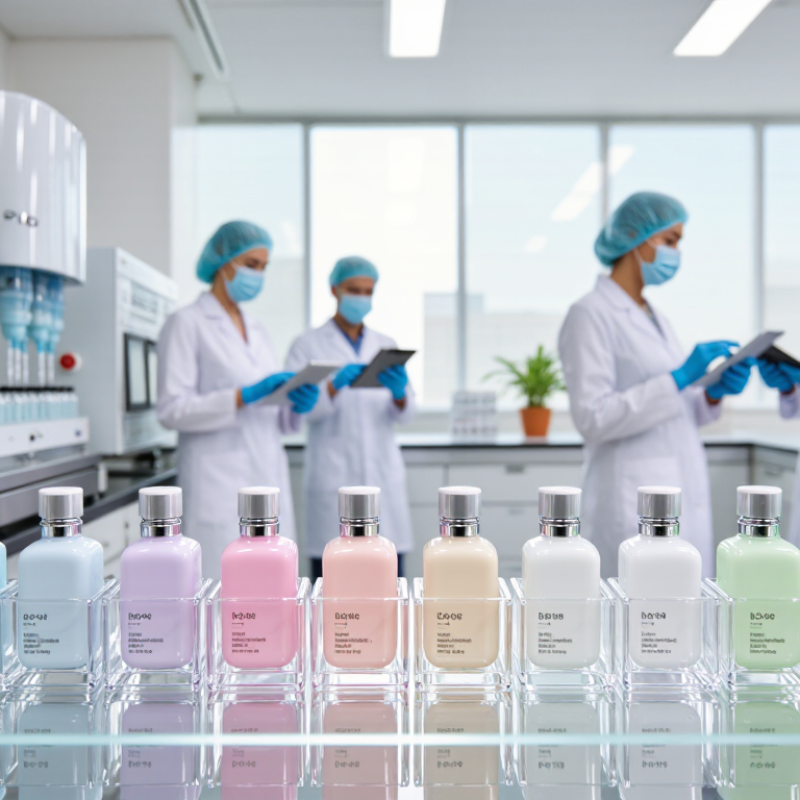
China’s Skincare Market: Over RMB 500 Billion in Annual Retail Sales
China’s skincare market has become too large to judge by factory size alone. Industry estimates place annual retail sales for broader beauty and personal care above RMB 500 billion. Euromonitor International’s Beauty and Personal Care data supports this wider market view. However, China’s National Bureau of Statistics reported RMB 414.2 billion in cosmetics retail sales in 2023. The difference reflects different product definitions, channels, and research methods. The number is impressive, but not perfectly comparable.
For overseas buyers, top skincare treatment suppliers usually combine formulation capability, controlled production, and responsive technical support. Look for facilities using documented GMP procedures and batch-level quality records. Suppliers should also explain ingredient sourcing, stability testing, microbiological testing, and packaging compatibility. Practical experience matters here. A sample may feel elegant in a laboratory, yet fail after three months in a hot warehouse. Ask for pilot batches, full specifications, and independent test results before placing larger orders. Supplier audits should examine water systems, filling lines, worker hygiene, and complaint handling. Production speed is useful, but consistency matters more. Some suppliers still present vague “natural” claims without clear evidence. That deserves careful questioning. Demand forecasts also need restraint, because online sales data can overstate repeat purchases. Recent reports from Mintel and Euromonitor indicate continued demand for moisturising, anti-ageing, sensitive-skin, and sun-care solutions, creating opportunities for suppliers with focused treatment expertise rather than endless product lists.
Top Chinese Suppliers by Treatment Type, Capacity, and Export Reach
China’s strongest skincare treatment suppliers are usually specialized, not universal. Facial-care OEMs handle cleansers, serums, masks, and moisturizers. Treatment-focused factories often produce ampoules, peeling formulas, and soothing post-procedure products. According to Grand View Research, the global skincare market was valued at about US$155.7 billion in 2022, with continued growth expected through 2030. This demand is pushing Chinese manufacturers toward cleaner formulations, automated filling, and faster sampling.
Capacity separates serious suppliers from attractive websites. Mid-sized factories may produce several hundred thousand units monthly, while large facilities can exceed one million units across multiple lines. Their useful evidence includes batch records, stability testing, microbial controls, and ISO 22716-based procedures.
Export reach also varies. Suppliers near major ports often serve Southeast Asia, Europe, North America, and the Middle East. ITC Trade Map, using China Customs data, is useful for checking cosmetics export trends instead of trusting sales claims. Some suppliers still confuse production capacity with reliable delivery. That deserves scrutiny.
Tips: Request a treatment-specific sample set, not one random product. Ask for monthly output, minimum order quantity, lead time, and export documents. Verify whether testing covers the finished formula, packaging, and preservative system. A factory may look modern, yet its quality records can be thin. I would also compare three audited suppliers before choosing one, because low pricing often hides slower revisions or weaker after-sales support.
Key Certifications: ISO 22716, GMP, NMPA, and EU Cosmetics Compliance
Choosing China’s top skin care treatment suppliers requires more than comparing prices or glossy product samples. Certification records offer a clearer starting point. ISO 22716 shows that a factory follows organized cosmetic good manufacturing practices. Inspectors should review hygiene controls, staff training, equipment cleaning, and batch documentation. GMP evidence should match the actual production site and product category.
NMPA compliance is essential for products sold in China. However, NMPA filing and registration requirements may differ by product type. A reliable supplier should explain the pathway clearly. Ask for ingredient evaluations, safety assessments, testing records, and traceable filing information. For exports to Europe, suppliers should understand the EU Cosmetics Regulation. This includes a Product Information File, a Cosmetic Product Safety Report, proper labeling, and notification through the required system. An EU compliance claim needs documents, not confident language.
I would also check ISO certificates through the issuing body. Confirm the site address, certificate scope, and expiration date. Review recent batch records, stability results, microbial testing, and certificates of analysis. Small gaps matter. A missing signature can reveal weak document control. No audit is perfect. Factory visits, sample testing, and regular quality reviews still provide valuable evidence. Experienced suppliers usually answer technical questions with specific records, not general promises. Their willingness to discuss limitations may be more trustworthy than polished marketing.
What Are China Top Skin Care Treatments Suppliers? – Key Certifications: ISO 22716, GMP, NMPA, and EU Cosmetics Compliance
| Evaluation Dimension | ISO 22716 | GMP Manufacturing Practices | NMPA China Compliance | EU Cosmetics Compliance | Recommended Supplier Evidence |
|---|---|---|---|---|---|
| Primary Purpose | Provides good manufacturing practice guidelines for the production, control, storage, and shipment of cosmetic products. | Controls hygiene, personnel, premises, equipment, materials, production, quality control, and documentation. | Ensures cosmetics placed on the Chinese market meet the requirements of China’s regulatory framework, including the Cosmetics Supervision and Administration Regulation. | Ensures products comply with Regulation (EC) No. 1223/2009 before being placed on the European Union market. | Request a current certificate or audit report, documented quality procedures, and evidence that the manufacturing site is covered. |
| Certification or Regulatory Status | Management Standard ISO 22716 certification is commonly used as third-party evidence of cosmetic GMP practices. |
Quality System GMP may be demonstrated through certification, customer audits, regulatory inspections, or documented compliance controls. |
Market Requirement Product filing or registration requirements depend on the product category and intended use in China. |
Market Requirement Compliance documentation is required before legal sale in the EU. |
Check issuing bodies, certificate scope, validity dates, manufacturing address, and audit status. |
| Product Classification | Does not determine whether a product is an ordinary cosmetic, special cosmetic, or another regulated product. | Manufacturing controls should be appropriate to the product type, formula, packaging, and production process. | China distinguishes between ordinary cosmetics and special cosmetics. Hair dye, hair perm, sunscreen, and products claiming hair loss prevention are examples of special cosmetics under the regulatory framework. | Products must meet the EU definition of a cosmetic product and must not make medicinal or misleading claims. | Ask for a written regulatory classification review for each formula and claim set. |
| Required Technical File | Focuses on manufacturing and quality records rather than market-entry registration. | Typically includes batch records, specifications, test methods, deviation records, complaints, recalls, and change-control documents. | Depending on the product, documentation may include formula information, product technical requirements, safety assessment materials, testing reports, labels, and filing or registration records. | A Product Information File is required and generally includes the product description, cosmetic product safety report, manufacturing method, GMP statement, and evidence supporting claims. | Use a document checklist and verify that the supplier can maintain records for the required retention period. |
| Safety Assessment | Supports controlled production but does not replace a product safety assessment. | Requires appropriate controls for raw materials, contaminants, microbiological quality, packaging compatibility, and finished-product testing. | Safety assessment and testing requirements depend on the product category and applicable Chinese rules. | A cosmetic product safety report must be completed by a suitably qualified safety assessor before EU market placement. | Review toxicological data, allergen information, microbiological limits, preservative efficacy results, and stability data where applicable. |
| Regulatory Notification or Filing | Not a government product notification system. | Not a substitute for national market authorization, notification, or filing. | General cosmetics normally require filing, while special cosmetics generally require registration before marketing in China, subject to current regulatory requirements. | Responsible persons must submit product information through the Cosmetic Products Notification Portal before placing products on the EU market. | Request filing or notification references, responsible-party details, and confirmation that the submitted formula and label match the commercial product. |
| Label and Claims Control | Requires documented control of specifications and production information, but does not itself approve marketing claims. | Claims should be supported by controlled specifications, test results, and approved artwork versions. | Chinese labels and claims must comply with applicable Chinese cosmetic labeling and advertising requirements. | EU claims must comply with common criteria such as legal compliance, truthfulness, evidential support, fairness, and informed decision-making. | Audit artwork approval, ingredient naming, warnings, usage instructions, batch coding, shelf-life information, and claim substantiation. |
| Quality Control Capability | Expects defined sampling, testing, release, and recordkeeping procedures. | Should include qualified personnel, calibrated equipment, validated or verified test methods, and controlled laboratories or approved external laboratories. | Testing and documentation should support the applicable Chinese filing or registration pathway and product safety requirements. | Quality and safety records should support the Product Information File and ongoing product surveillance. | Request sample certificates of analysis, laboratory qualifications, calibration records, stability protocols, and batch-release procedures. |
| Supplier Selection Priority | Strong Advantage Useful for screening manufacturers with structured cosmetic production controls. |
Essential Capability Important for consistent quality, traceability, hygiene, and change management. |
Required for China Sales Necessary when the product is intended for legal distribution in mainland China. |
Required for EU Sales Necessary when the product is intended for legal distribution in the European Union. |
Prioritize suppliers that can support the target market, product category, claims, documentation, testing, packaging, and post-market responsibilities. |
| Best-Fit Supplier Profile | Manufacturers with a documented cosmetic quality management system and auditable production processes. | Factories with controlled environments, trained operators, traceable materials, validated processes, and effective corrective-action systems. | Manufacturers experienced with Chinese filing or registration documentation and compliant Chinese labeling. | Manufacturers able to provide EU-ready technical documentation, safety data, claims support, and cooperation with the EU responsible person. | Use an on-site audit or qualified third-party audit before approving a long-term contract manufacturer. |
Private-Label Services: R&D, MOQ, Lead Times, and Production Scale
What Are China Top Skin Care Treatments Suppliers?
China’s leading skin care treatment suppliers often compete through private-label flexibility, not only factory size. Experienced suppliers can support formula development, packaging design, sample testing, and production planning under one workflow. Their R&D teams may adjust texture, fragrance, absorption, or active levels for a defined market. However, a laboratory sample is not a finished product. Stability testing, compatibility checks, microbial control, and documented quality procedures still matter.
MOQ can range from a few hundred units for pilot orders to tens of thousands for established formulas. A lower MOQ reduces inventory risk, but the unit cost may increase. Production lead times commonly depend on formula complexity, packaging availability, testing requirements, and seasonal capacity. Simple stock packaging may move quickly. Custom molds and printed components can add several weeks. Large-scale factories offer stronger output, yet capacity alone does not prove reliable quality. I have seen attractive timelines change after packaging approval, so written milestones are essential.
Tips: Ask for a clear R&D quotation, sample revision limits, MOQ by component, and a realistic lead-time schedule. Request batch records, testing documents, and production photos when appropriate. Confirm who owns the formula and artwork. Do not accept vague claims about “advanced technology.” A small pilot order can reveal filling accuracy, color consistency, carton damage, and communication gaps. It may feel slower, but that weakness is useful feedback before scaling.
China Private-Label Skin Care Supplier Benchmarks
Indicative industry benchmarks by supplier scale. Values cover formulation development, minimum order quantity, production lead time, and estimated monthly production capacity; they are presented by supplier tier rather than by company or brand.
R&D and Sample Development Time
Minimum Order Quantity
First Production Lead Time
Estimated Monthly Production Capacity
Benchmark basis: typical private-label skincare manufacturing ranges. Actual figures vary according to formula complexity, packaging, testing requirements, regulatory documentation, and production scheduling.
Supplier Evaluation Metrics: Safety Testing, Innovation, Quality, and Cost
Choosing China’s top skincare treatment suppliers requires more than comparing product catalogs. Safety testing should lead the evaluation. Ask for recent microbial reports, stability data, ingredient specifications, and patch-test records. Review whether testing covers the finished formula, not only individual ingredients. Batch traceability matters too. A reliable supplier should explain how samples, production records, and complaints are managed.
Innovation should solve a clear consumer problem. Examine pilot samples, texture stability, delivery systems, and compatibility with common packaging. Request evidence from controlled trials or documented development work. Quality depends on repeatability. Compare three production batches for color, scent, viscosity, pH, and active content. An experienced supplier will discuss acceptable variation instead of promising perfect uniformity. That honesty is useful.
Cost needs careful interpretation. A low quotation may exclude testing, packaging checks, reformulation, or small-batch support. Build a full-cost sheet before making a decision. Include lead time, minimum order quantity, inspection fees, and possible waste. My evaluation method would score safety highest, then quality, innovation, and cost. Yet no scorecard is perfect. A technically strong supplier may still communicate poorly. Request factory evidence, verify documents independently, and keep written change-control terms. Small details reveal reliability.
Related Posts
-
2026 How to Achieve Perfect Skin Rejuvenation Naturally?
-

Top 10 Questions About Scar Revision You Need to Know?
-

Effective Pigmentation Treatment Solutions for Global Buyers?
-

10 Best Rosacea Treatments for Clearer Skin?
-
What is Dermal Fillers and How Do They Work?
-
What Are the Top 10 Types of Injectable Treatments?
Contact Us
Feel free to contact us anytime for questions, support, or assistance. We're here to help you with any inquiries you have.
- Address: 10220 S. Dolfield Rd Suite 110
Owings Mills, MD, 21117 - Email: sale@oshanbeauty.com
- Call Us: (410) 356-0000
- Working hours:
Monday – Friday: 9am – 5pm
Saturday and Sunday: Closed